Missing from AI answers
Assistants recommend clinics whose websites state treatments, prices and opening hours plainly. Many independent sites keep them in PDFs or behind “call us”.
Brand and website for an independent physio clinic, built to turn “best physio near me” questions from Google and AI assistants into bookings.
Visit the website (opens in a new tab)
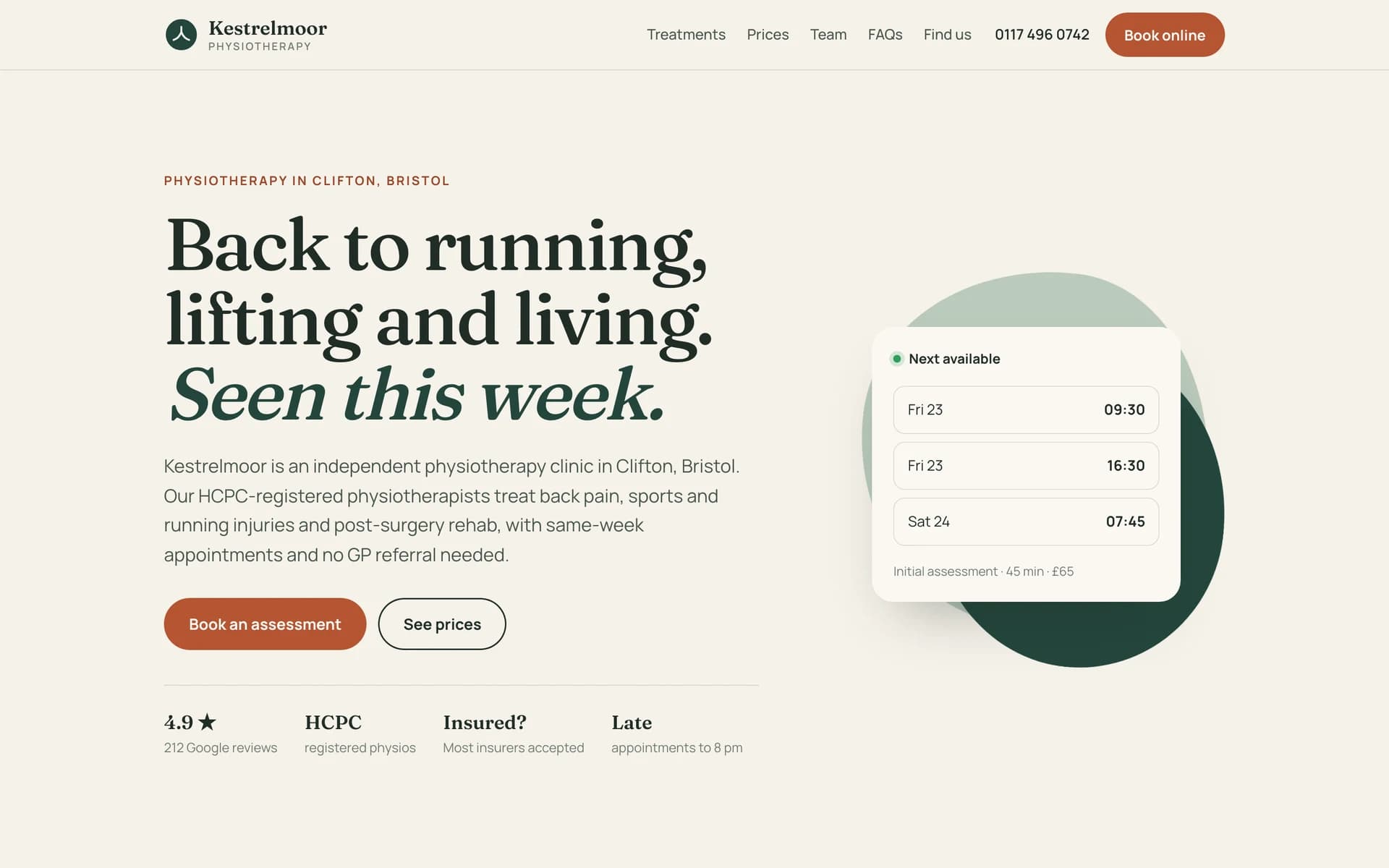
Kestrelmoor Physiotherapy is an independent clinic in Clifton, Bristol. We designed its brand and website around one goal, booked appointments, now that patients start by asking Google or an AI assistant who to see.
Independent clinics compete with national chains and directories for the same searches, and increasingly for the same AI answers. A patient in pain wants three answers fast: are you any good, what will it cost, and can I be seen this week. Most clinic websites answer none of them on the first screen.
Assistants recommend clinics whose websites state treatments, prices and opening hours plainly. Many independent sites keep them in PDFs or behind “call us”.
People in pain don’t wait for a callback. If booking takes more than a minute, they book somewhere else.
Blue-and-white logos and stock photos of spines make every clinic look the same, which leaves price as the only difference.
Foundation first, in this order, so each step makes the next one work harder.
One clear promise for one audience: active people in Bristol who want to be seen this week, with no referral.
A warm, confident brand that looks nothing like a hospital: a kestrel mark, forest and terracotta, a characterful serif.
Every page opens with the answer an assistant would give: who, what, where, how fast and how much.
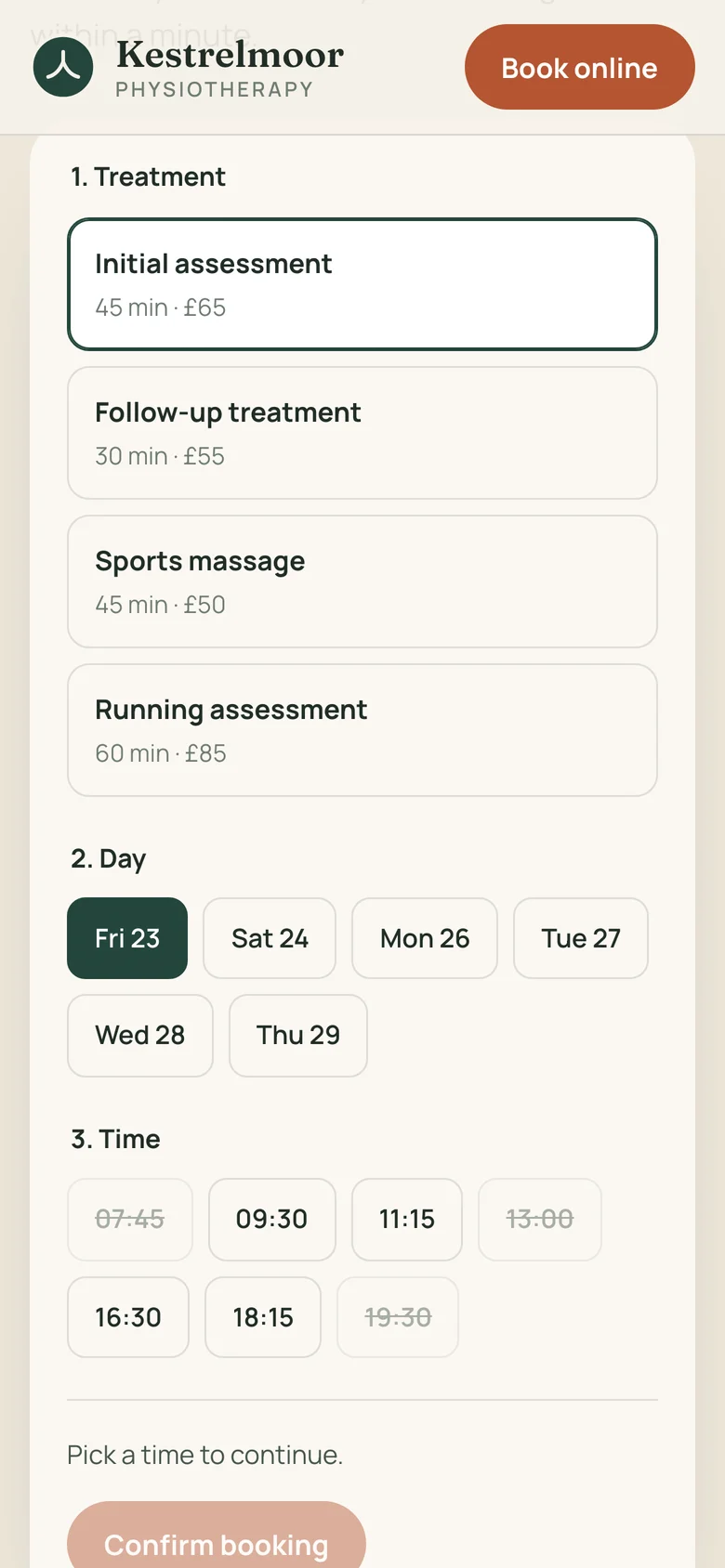
Treatment, day, time. Missed calls get a booking link by text within a minute.
The clinic, its treatments, prices, hours and reviews marked up so Google and AI assistants can read and quote them.
A kestrel in flight drawn from three strokes, set beside a modern serif wordmark. Forest green carries trust; terracotta marks every action, so “Book” is always the warmest thing on the screen.
The first screen answers the three questions patients ask: what the clinic treats, that there’s no referral needed, and the next free appointments, live from the diary.
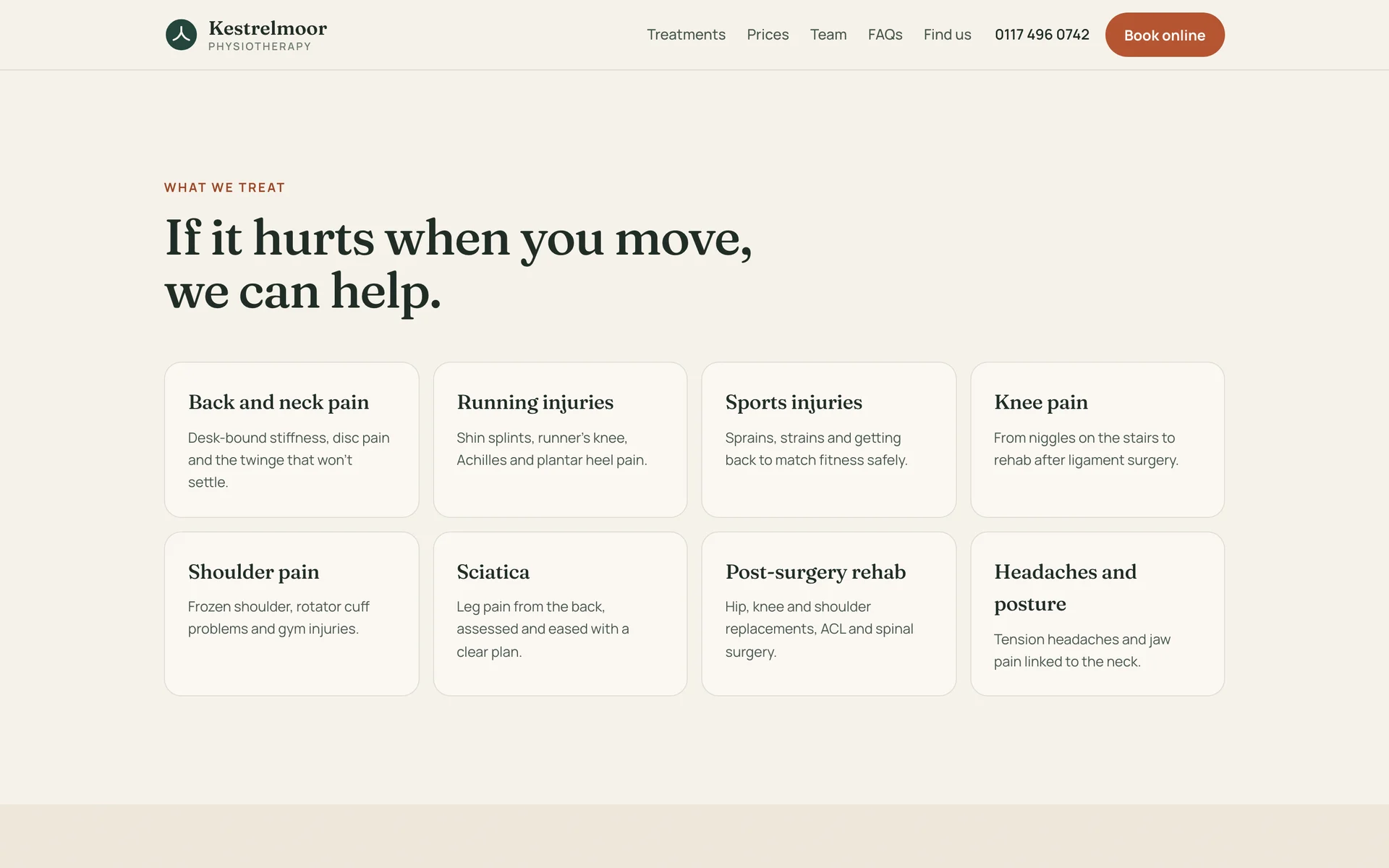
Nobody searches for “musculoskeletal assessment”. Each condition is named the way patients describe it, so the page matches the question they type or ask.
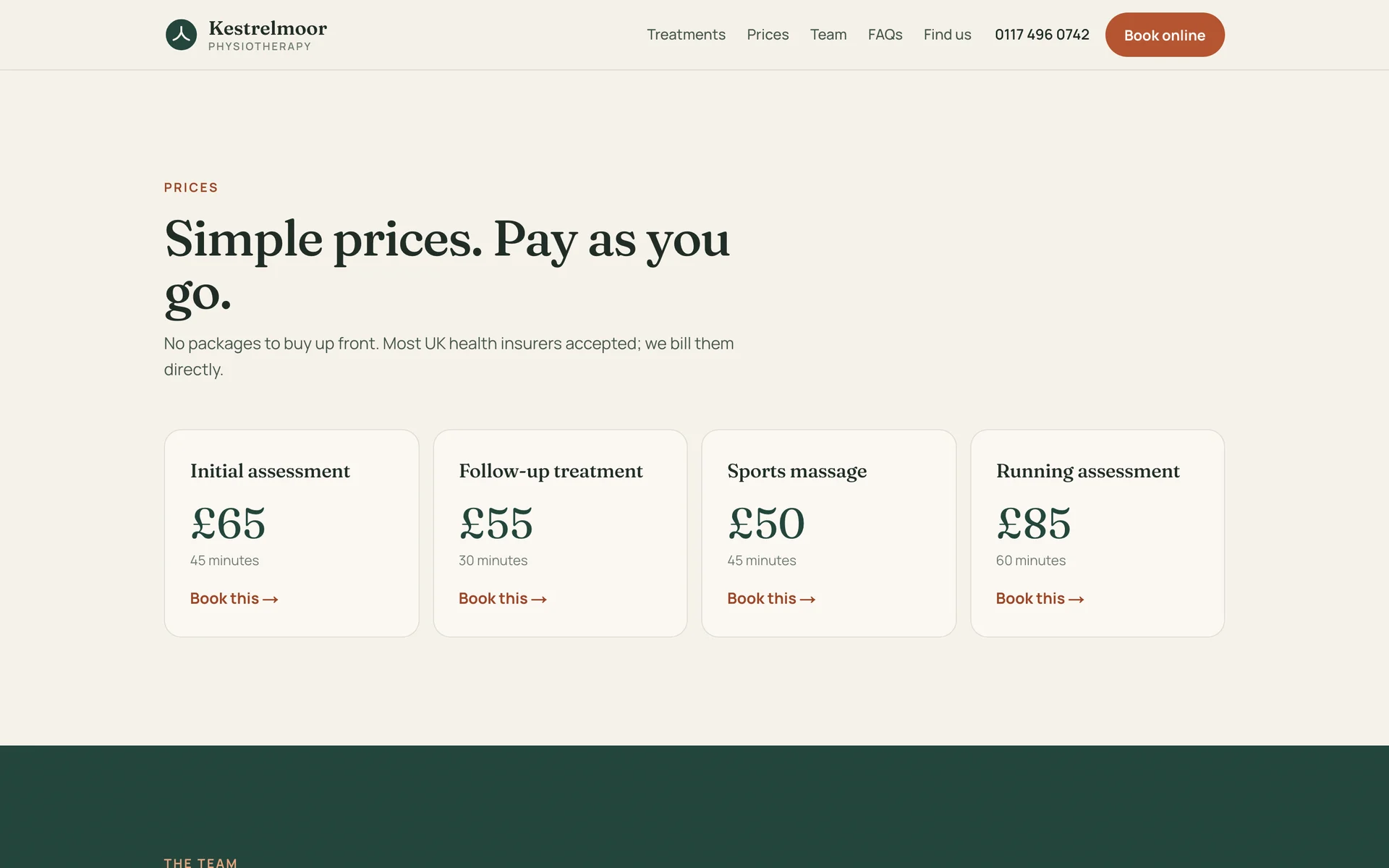
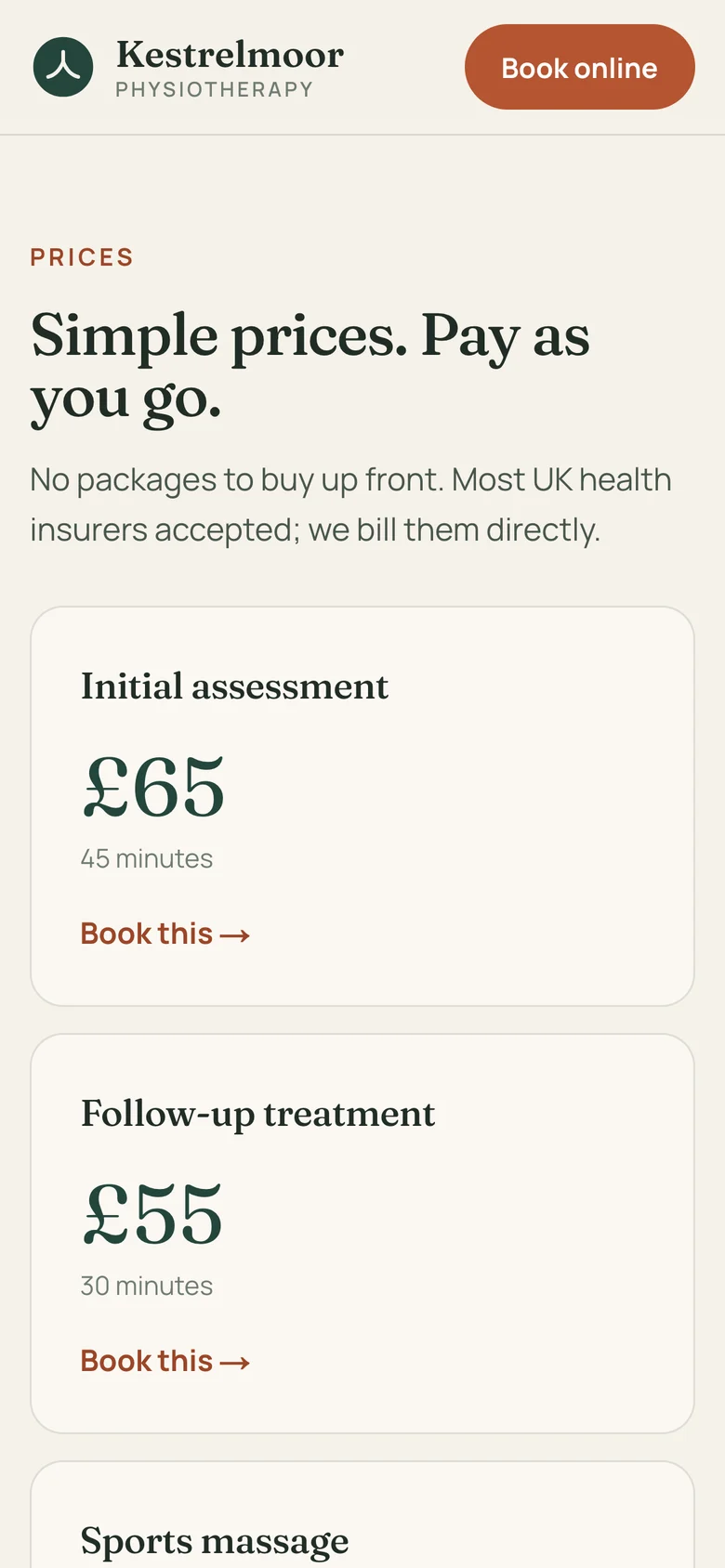
No PDFs and no “call for prices”. Assistants quote clinics that show their prices; most clinics don’t.
Choose a treatment, a day and a time. Taken slots are struck through, so nobody picks a time that isn’t free.
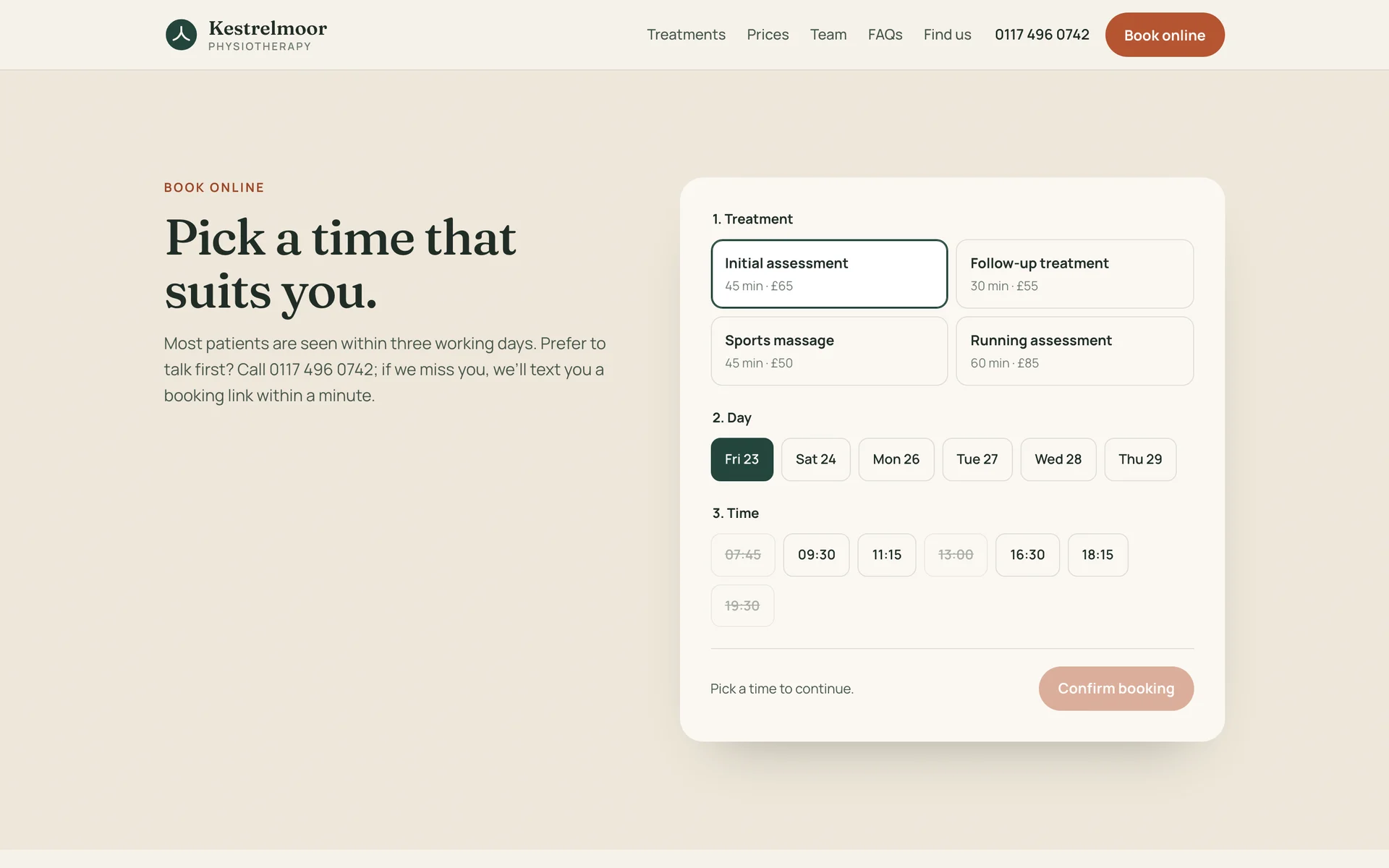
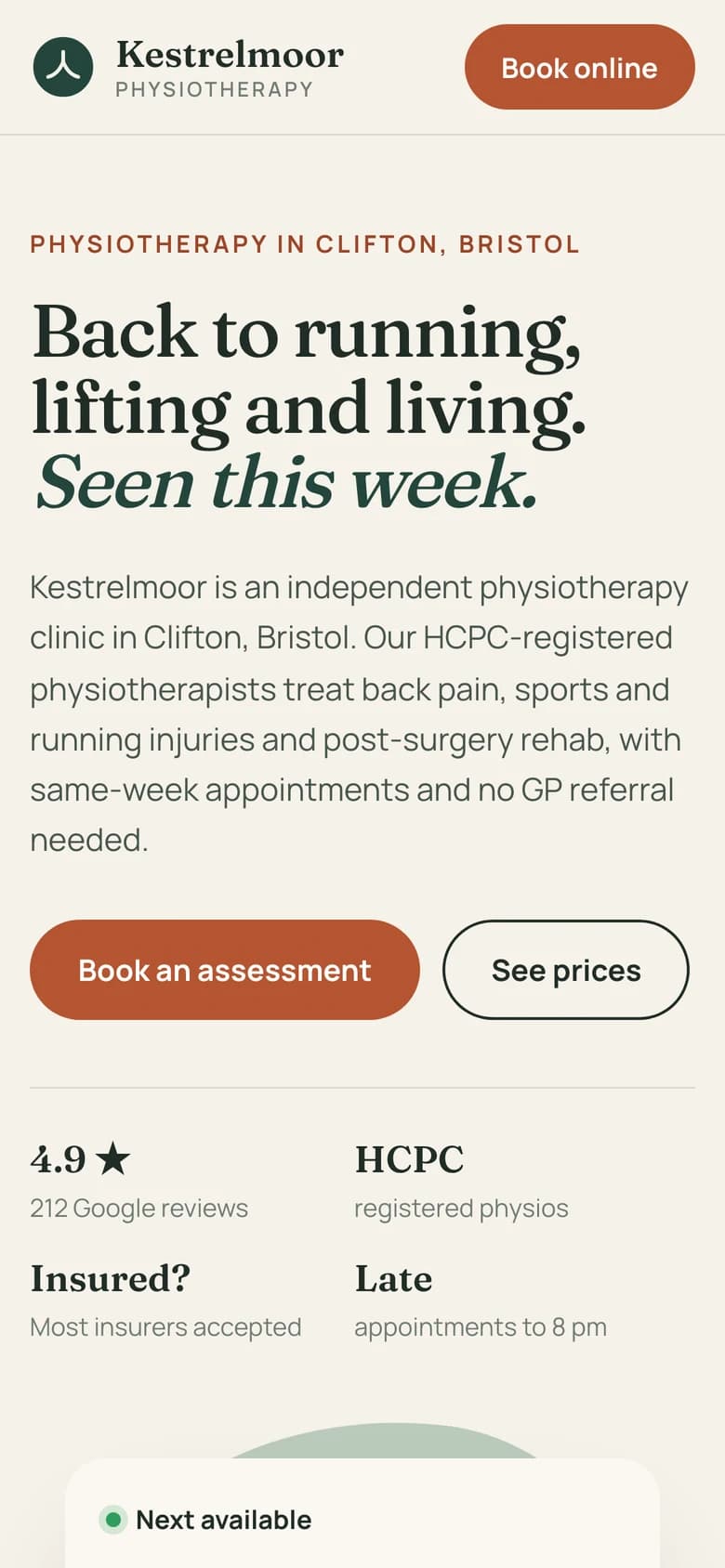
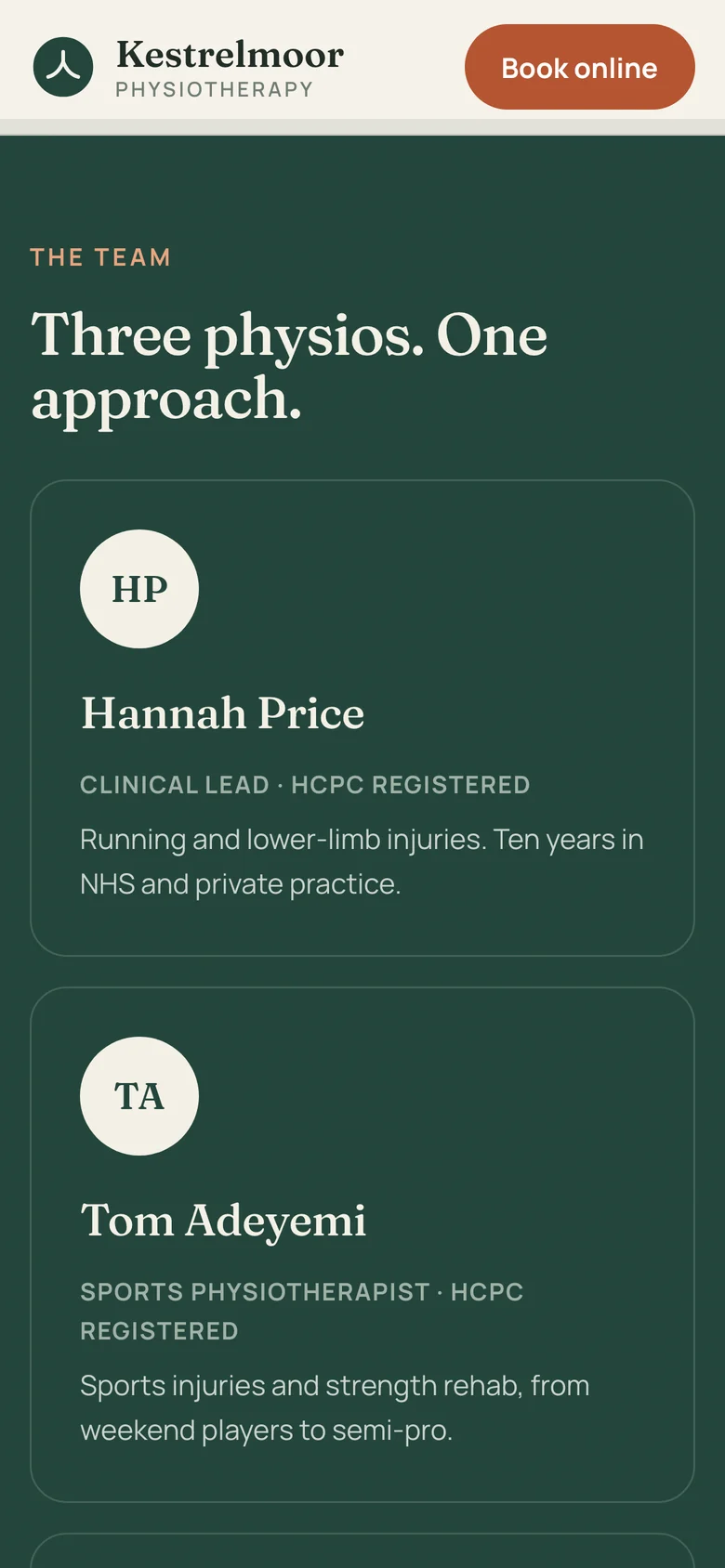
Most patients find a physio on their phone, often while it hurts. Every page was designed at phone size first, with the booking button always in reach.
Behind the pages, the clinic is described in the vocabulary search engines and AI assistants read: what it is, where it is, what it costs and when it’s open.
{
  "@context": "https://schema.org",
  "@type": ["MedicalClinic", "LocalBusiness"],
  "name": "Kestrelmoor Physiotherapy",
  "medicalSpecialty": "Physiotherapy",
  "areaServed": "Bristol",
  "openingHoursSpecification": [ … ],
  "makesOffer": [{
    "@type": "Offer",
    "name": "Initial assessment",
    "price": "65", "priceCurrency": "GBP"
  }, … ]
}Results we’ll add to this page as they come in, each against the baseline from launch.
Start with a free audit, then see exactly what we’d build and in what order.
Free audit firstNo obligationPlain-English results