Writing about the product, not the problem
Buyers search for their problem first. Content that starts with features misses them until it’s too late.
How we build a content engine for a small B2B software company, so buyers researching the problem find the product before they find a competitor.
B2B buyers research for weeks before they talk to anyone, and more of that research now happens in ChatGPT and Perplexity. This is how we turn a software company’s expertise into content that ranks, gets cited and brings in demo requests.
Small software teams publish when someone has time: a product update here, a generic “ultimate guide” there. The posts don’t answer the questions buyers ask at each stage, rarely rank, and never get quoted by AI assistants, so the blog costs time and brings in little.
Buyers search for their problem first. Content that starts with features misses them until it’s too late.
“[Product] vs [competitor]” and “alternatives to…” searches go to review sites that tell someone else’s story.
Nobody can say which articles produced a demo request, so content is the first thing cut.
Foundation first, in this order, so each step makes the next one work harder.
Every question buyers ask, from “how do I…” to “which tool for…”, grouped by stage and by how close it is to a purchase.
Comparison and alternatives pages first, because they’re closest to a decision, then the problem-led guides that feed them.
Each piece opens with a direct answer, then detail, examples and sources, written to be quoted.
Every article points to one next step: a template, a demo or a short product tour.
What ranked, what got cited, what produced pipeline, and what to write or rewrite next.
A content system the team can keep running: a plan, a format and a review that ties every piece to pipeline.
Buyer questions grouped by stage, with search demand and the pages that already win them, so every piece has a reason to exist.
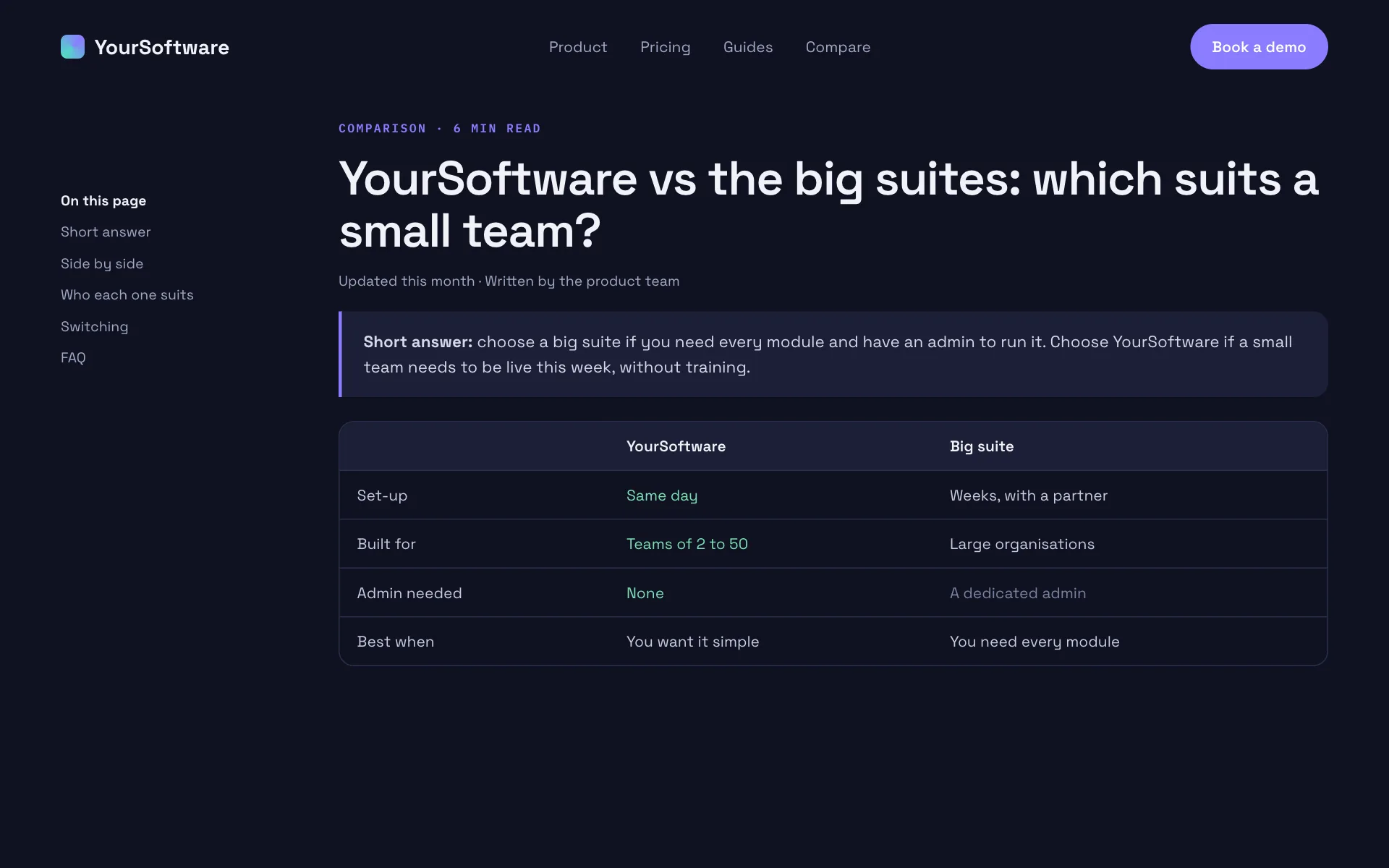
Honest comparisons that explain who each tool suits, including when the competitor is the better fit. Buyers trust them, and assistants quote them.
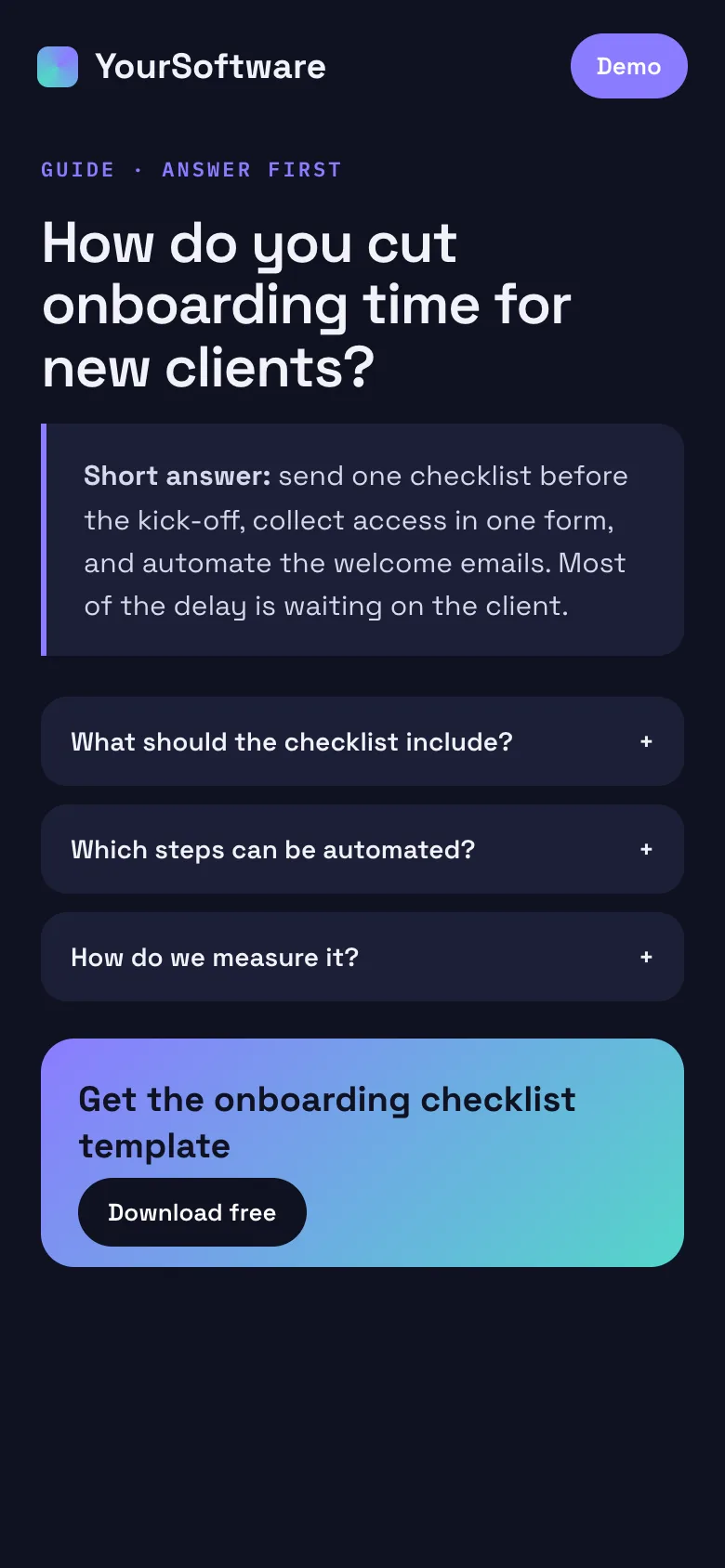
Problem-led guides with a short answer at the top, clear headings that match real questions, and an FAQ marked up for search.
Traffic, AI citations, sign-ups and demo requests per article, so the team can see what content is worth.
These are the numbers in the monthly report, each measured against the baseline from the first audit.
Start with a free audit, then see exactly what we’d build and in what order.
Free audit firstNo obligationPlain-English results