Slow first replies
The firm that answers first usually wins the job, and a small team can’t answer first by hand.
How we make sure a plumbing and heating firm answers every enquiry within minutes, books the job and follows up, without hiring an office team.
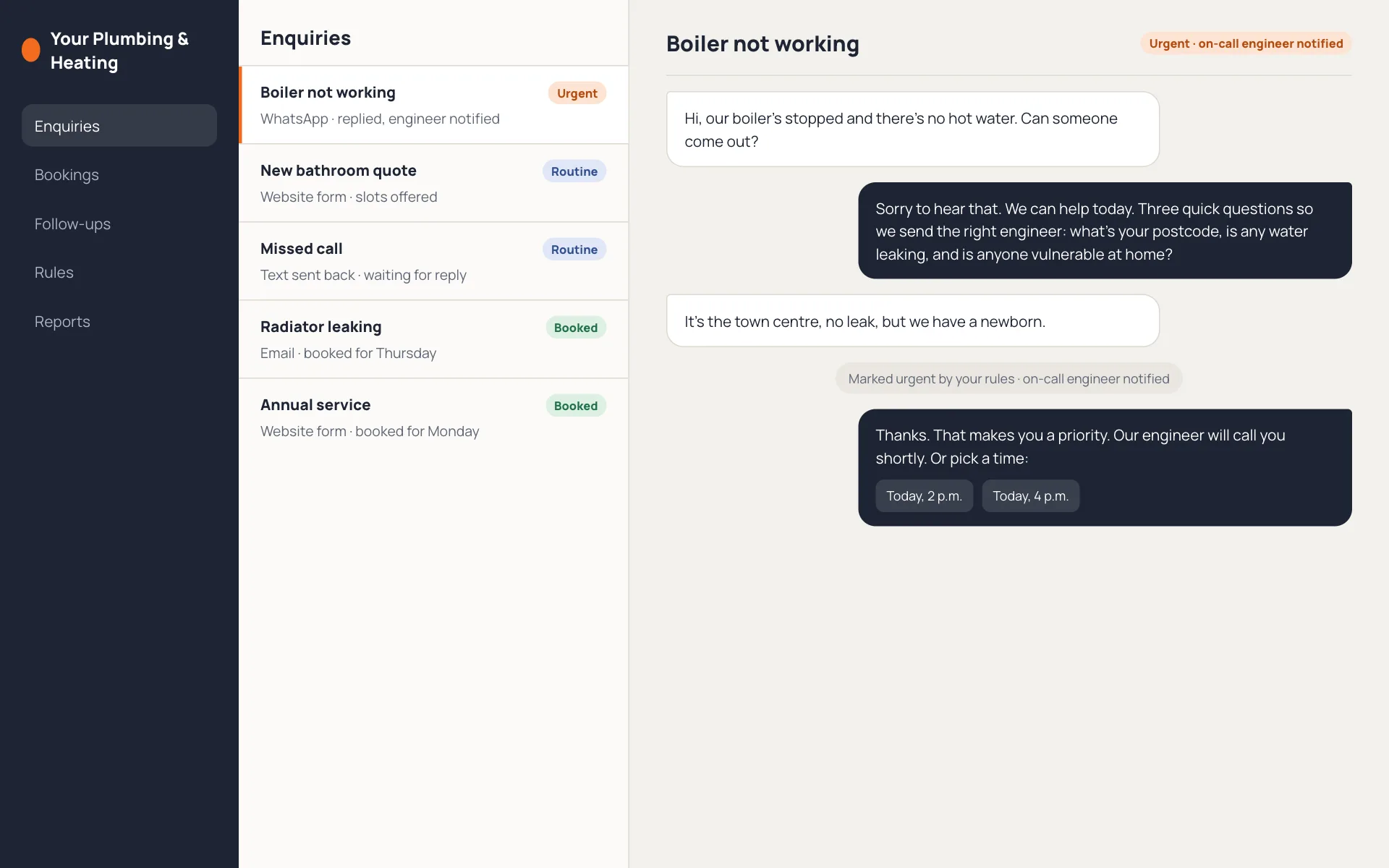
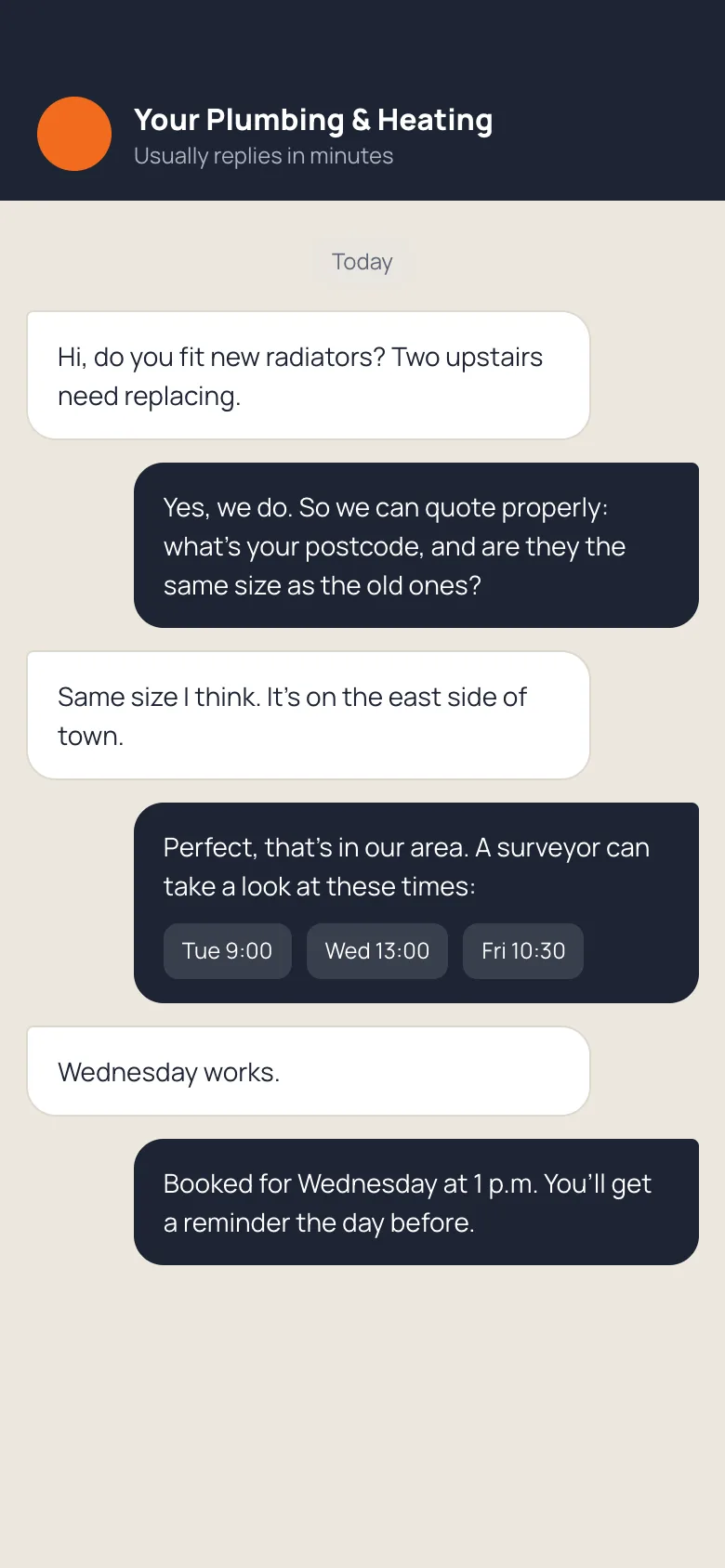
When a boiler breaks, the customer contacts three firms and books the first one that replies. This is how we use AI automation to make that first reply come from a small firm whose engineers are all out on jobs.
Engineers can’t answer the phone under a sink. Enquiries arrive by phone, web form, WhatsApp and Facebook, often in the evening, and the reply comes hours later when someone gets back to the van. By then the customer has booked someone else.
The firm that answers first usually wins the job, and a small team can’t answer first by hand.
Calls, forms, WhatsApp, Facebook and email, with no single list of who is waiting.
A quote is sent and never chased, because nobody has time to follow up.
Foundation first, in this order, so each step makes the next one work harder.
Every step from first contact to paid invoice, mapped and timed, to find where jobs are lost.
A personal first reply on the channel the customer used, within minutes, day or night, following rules the owner approves.
Three questions sort urgent call-outs from routine work and send each to the right person.
Routine jobs pick a slot from the calendar; quotes get a reminder; finished jobs get a review request.
Replies and hand-overs reviewed every month, and the rules adjusted as the business changes.
One flow for every enquiry, with a person stepping in wherever judgement is needed.
Every channel feeds one flow. The rules are written in plain English, approved by the owner and documented, so nothing happens that nobody agreed to.
New enquiry (form, WhatsApp, missed call)
  → personal reply in minutes, using rules you approve
  → three questions: job type, postcode, how urgent
  → urgent: notify the on-call engineer
  → routine: offer the next free slots from the calendar
  → no reply in 24 hours: one friendly follow-up
→ every step logged in the CRMA missed call gets a text within a minute with a link to book or describe the problem, so the job isn’t lost while the engineer is busy.
One list of every enquiry, quote and job, with its status, so the owner can see who is waiting at a glance.
Polite reminders on open quotes, and a review request after each finished job, sent automatically.
These are the numbers in the monthly report, each measured against the baseline from the first audit.
Start with a free audit, then see exactly what we’d build and in what order.
Free audit firstNo obligationPlain-English results