Coaching you can’t see
Video analysis and serve tracking are an academy’s strongest selling point, but they rarely appear before someone signs up.
Brand and website for a performance tennis academy, built to turn visitors into members by showing the training data and making a court two taps away.
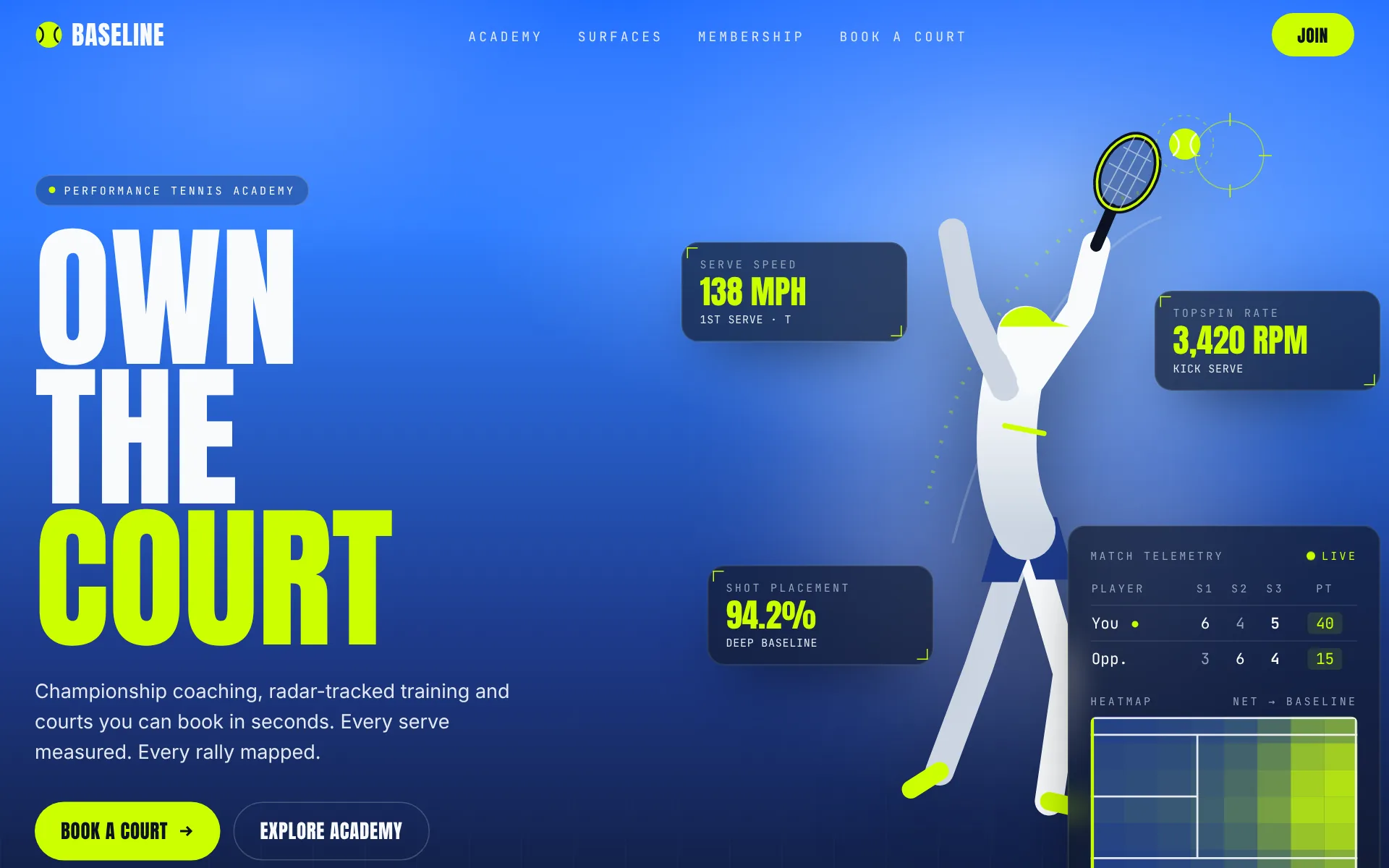
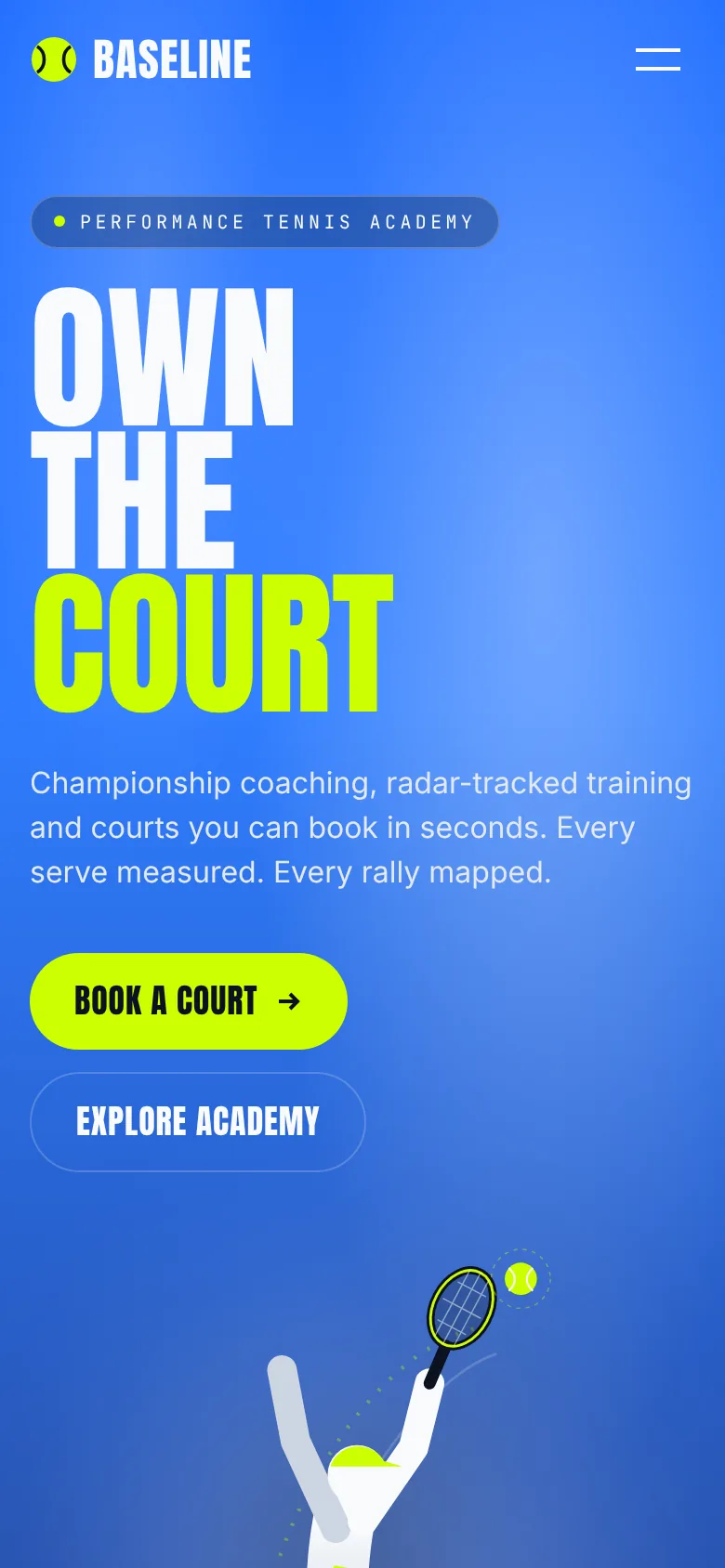
Baseline is a brand and website for a performance tennis academy. We built it to show how a sports business can sell what makes it different, coaching backed by data, and turn that into court bookings and memberships from the first screen.
Most club and academy websites read like a noticeboard: opening times, a PDF of fees and a phone number for bookings. Serious players choose an academy on coaching quality and how quickly they can get on court, and neither is easy to judge from a typical site.
Video analysis and serve tracking are an academy’s strongest selling point, but they rarely appear before someone signs up.
If a player can’t see a free court and take it, they book wherever they can.
Membership prices hidden in a download make every tier feel more expensive than it is.
Foundation first, in this order, so each step makes the next one work harder.
Performance tennis, measured: every serve tracked, every rally mapped.
Optic yellow on court navy and cobalt, with a tall condensed type that reads like a scoreboard.
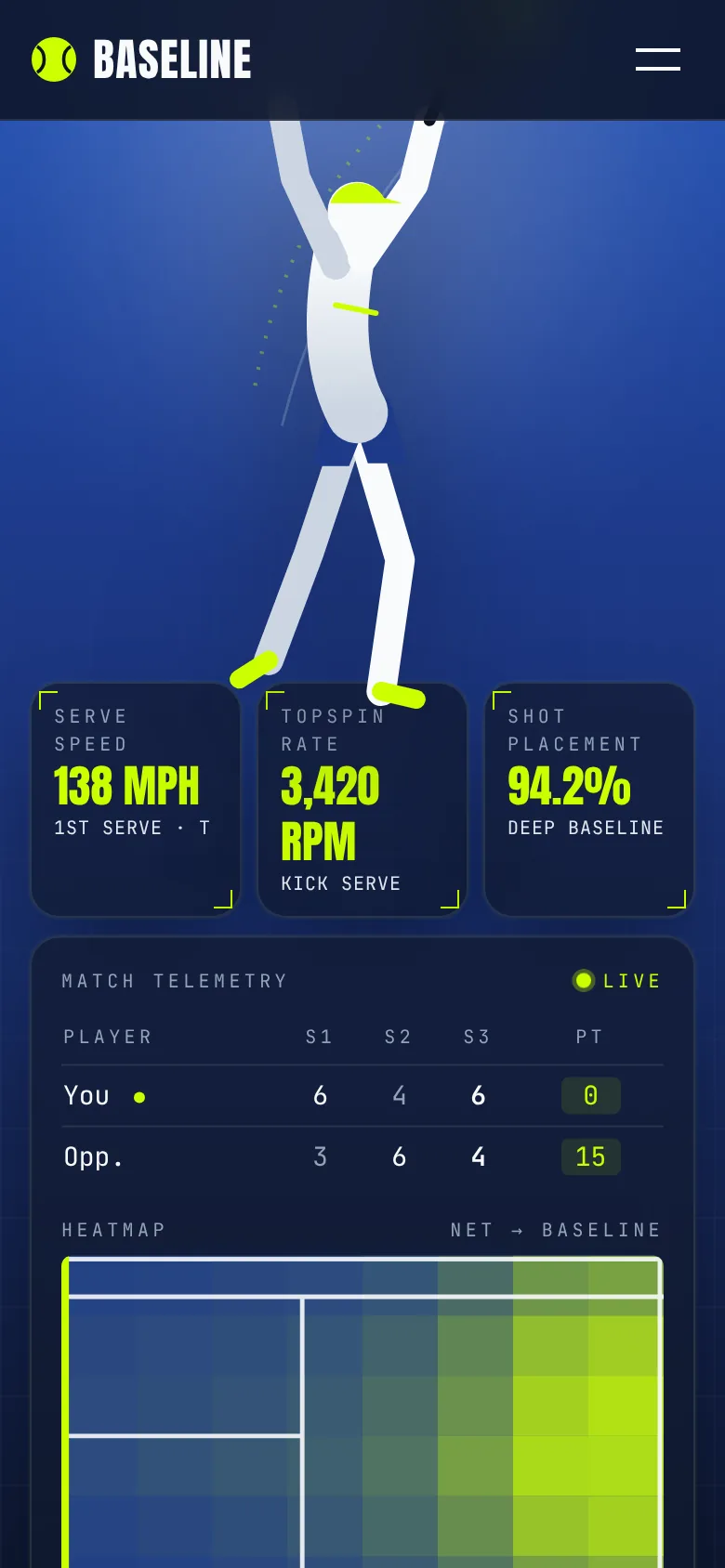
The first screen carries live serve speed, spin and placement readouts and a match widget, so the coaching method is visible before anyone reads a word.
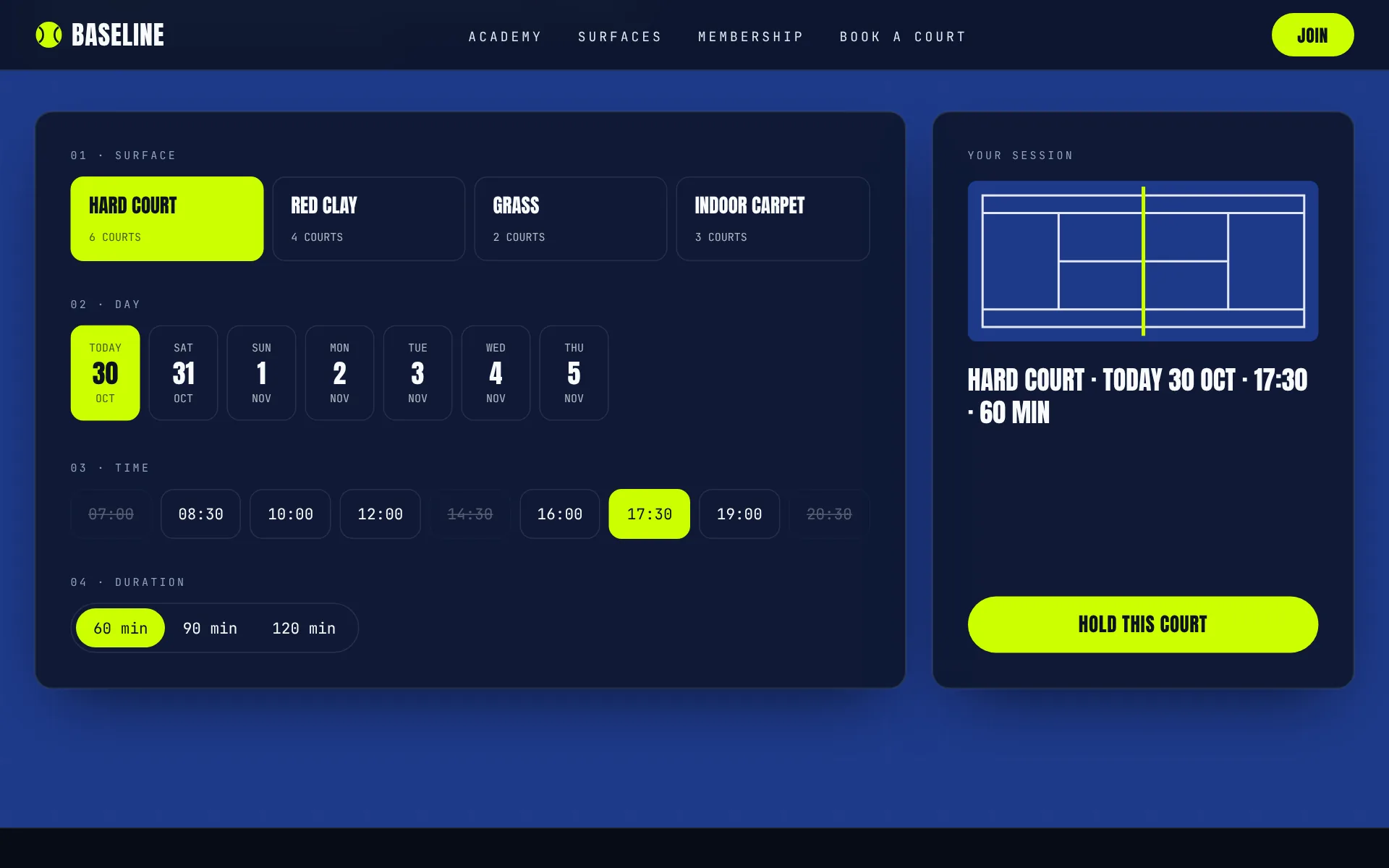
Surface, day, time, length. Taken slots are struck through and the session summary updates as you choose.
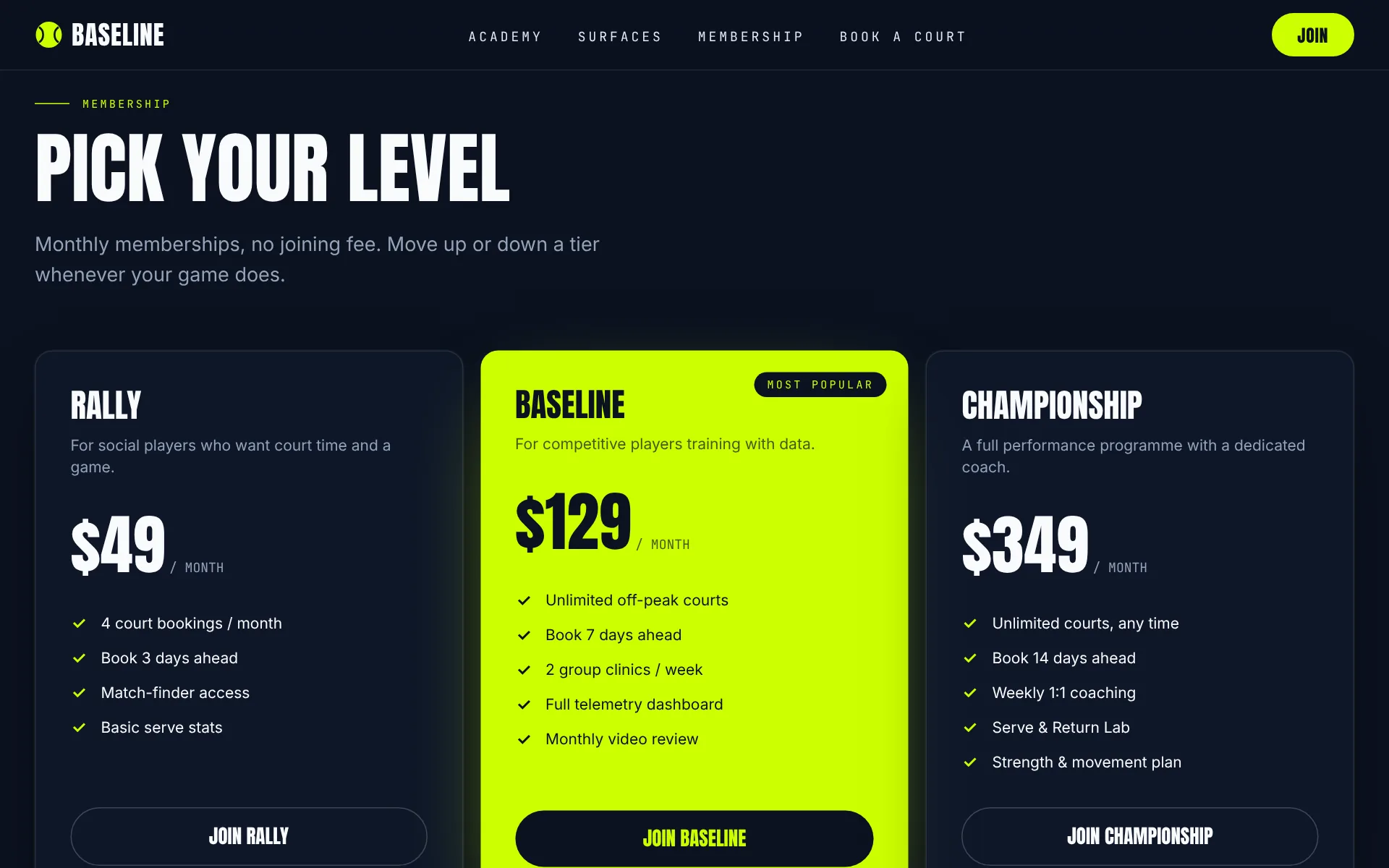
Three tiers with prices and what each includes, so players can choose without a sales call.
A ball drawn from two seams on an optic-yellow disc, set beside a tall condensed wordmark. Navy and cobalt carry the court; optic yellow marks every action and every live number.
A player at the top of the serve, framed by live readouts for serve speed, topspin and shot placement, with a floating match widget showing the set score and a heatmap of where shots land.
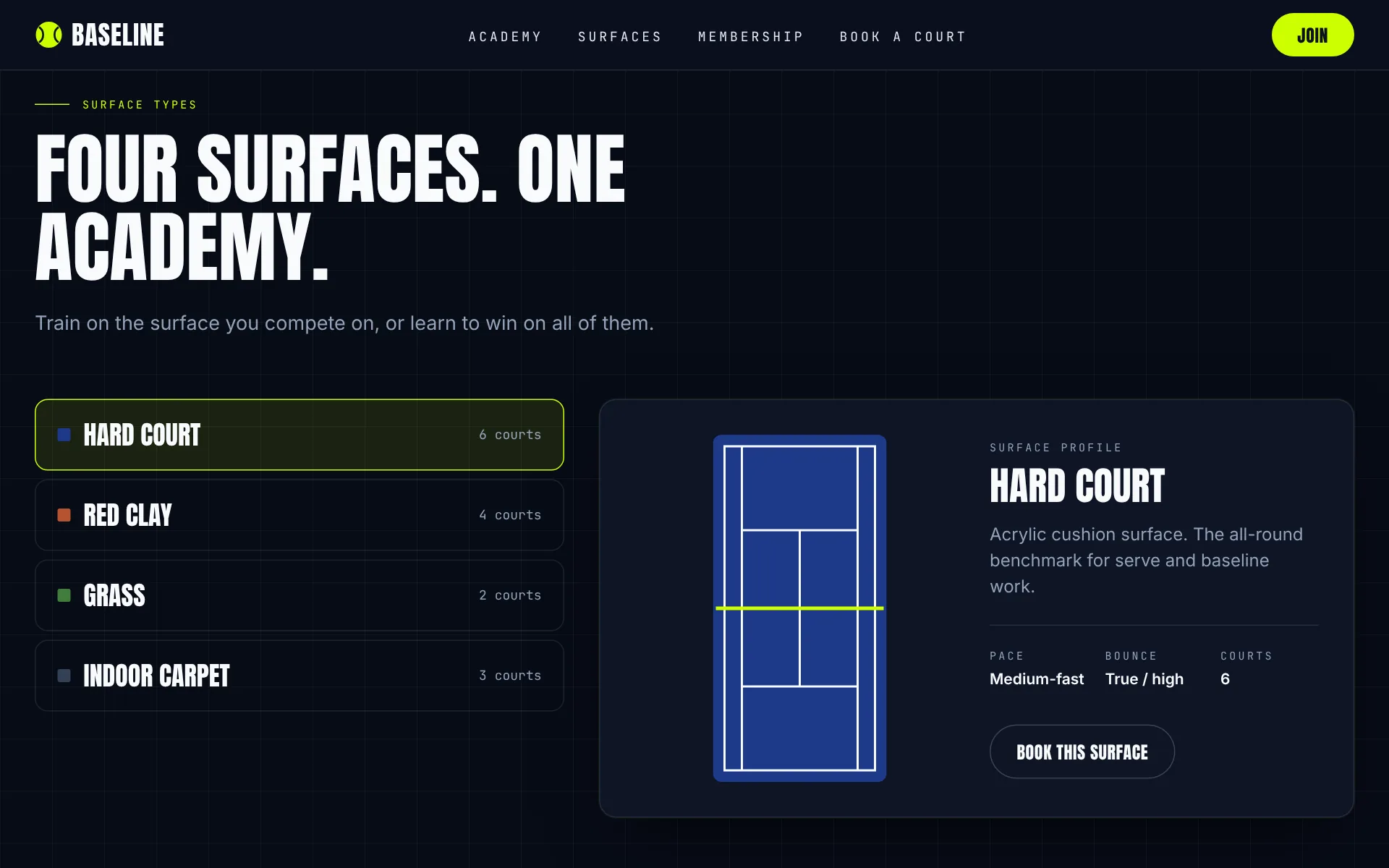
Players pick a surface and see it drawn as a court, with its pace, bounce and the number of courts, then book that surface in one tap.
Three tiers with prices and everything they include, so a player can compare them without asking.
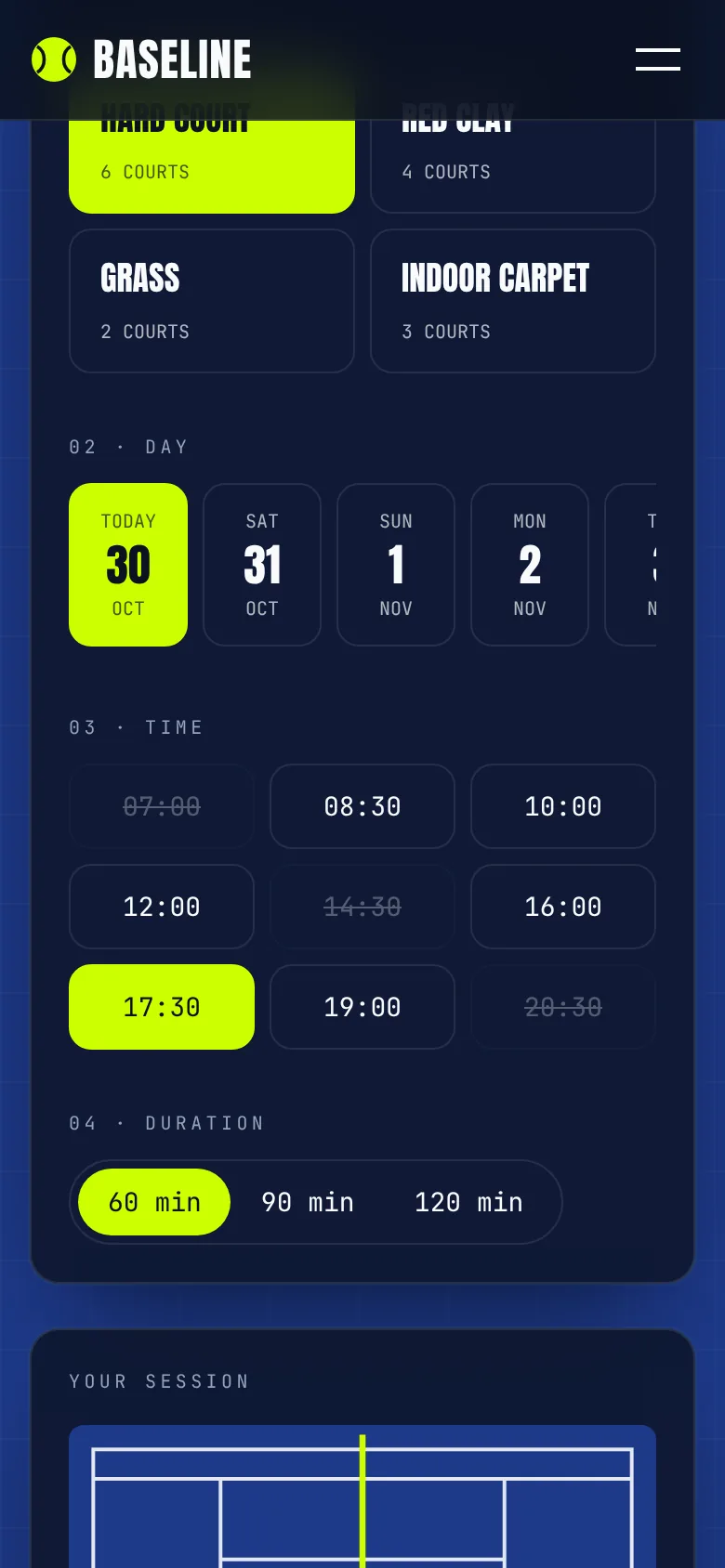
Surface, day, time and length. Booked slots are struck through, and the session summary updates with every choice.
Players book between sessions and check stats courtside. Every section was designed at phone size, with the readouts and booking steps reflowing to fit a thumb.
A design study has no results to report. On a live project, these are the numbers in the monthly report, measured against the starting baseline.
Start with a free audit, then see exactly what we’d build and in what order.
Free audit firstNo obligationPlain-English results