Missing facts
Prices, emergency availability and Saturday hours sit in a PDF or behind “call us”, so assistants recommend a practice that states them plainly.
How we take an independent dental practice from invisible to recommended when patients ask Google or an AI assistant for a dentist nearby.
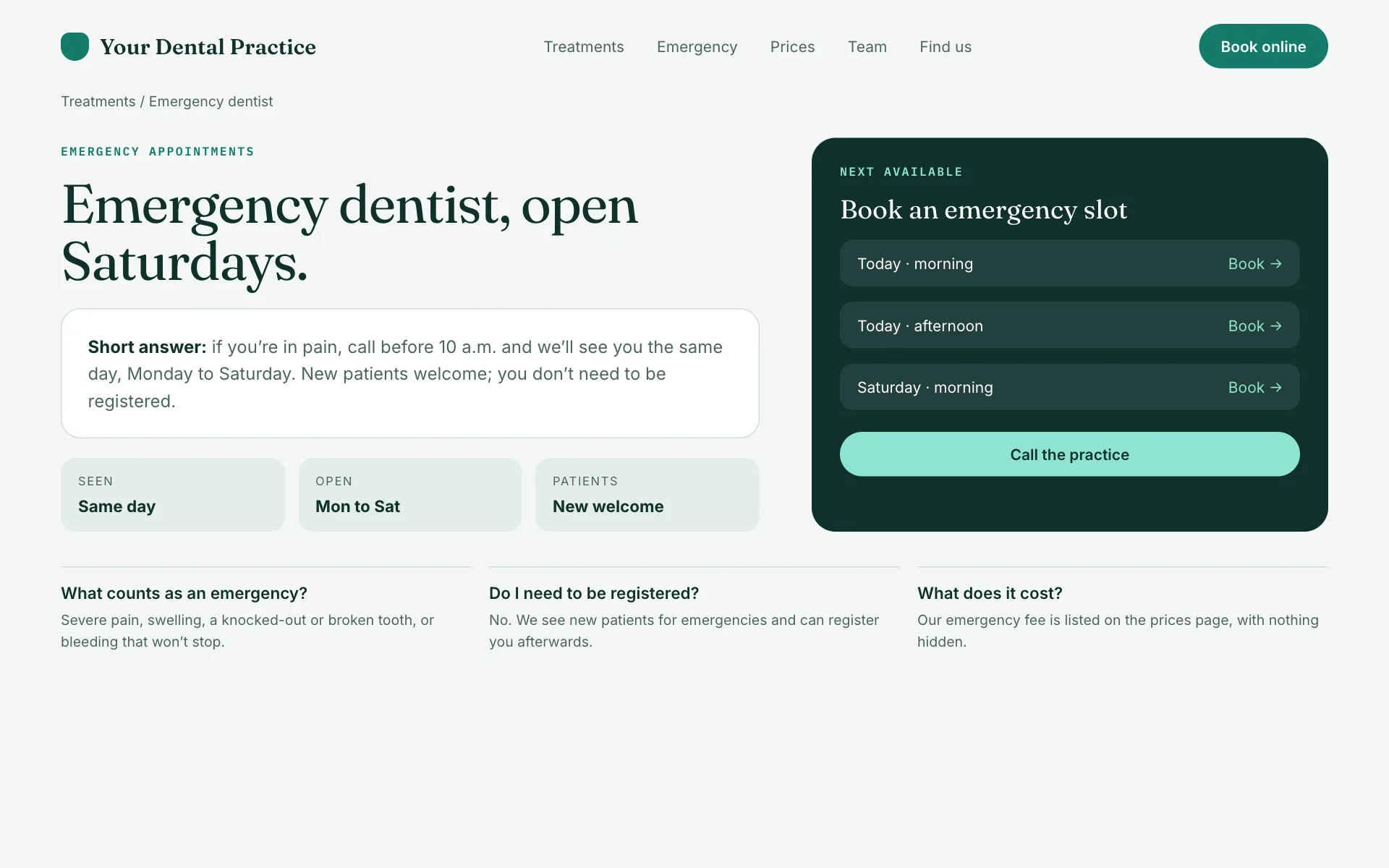
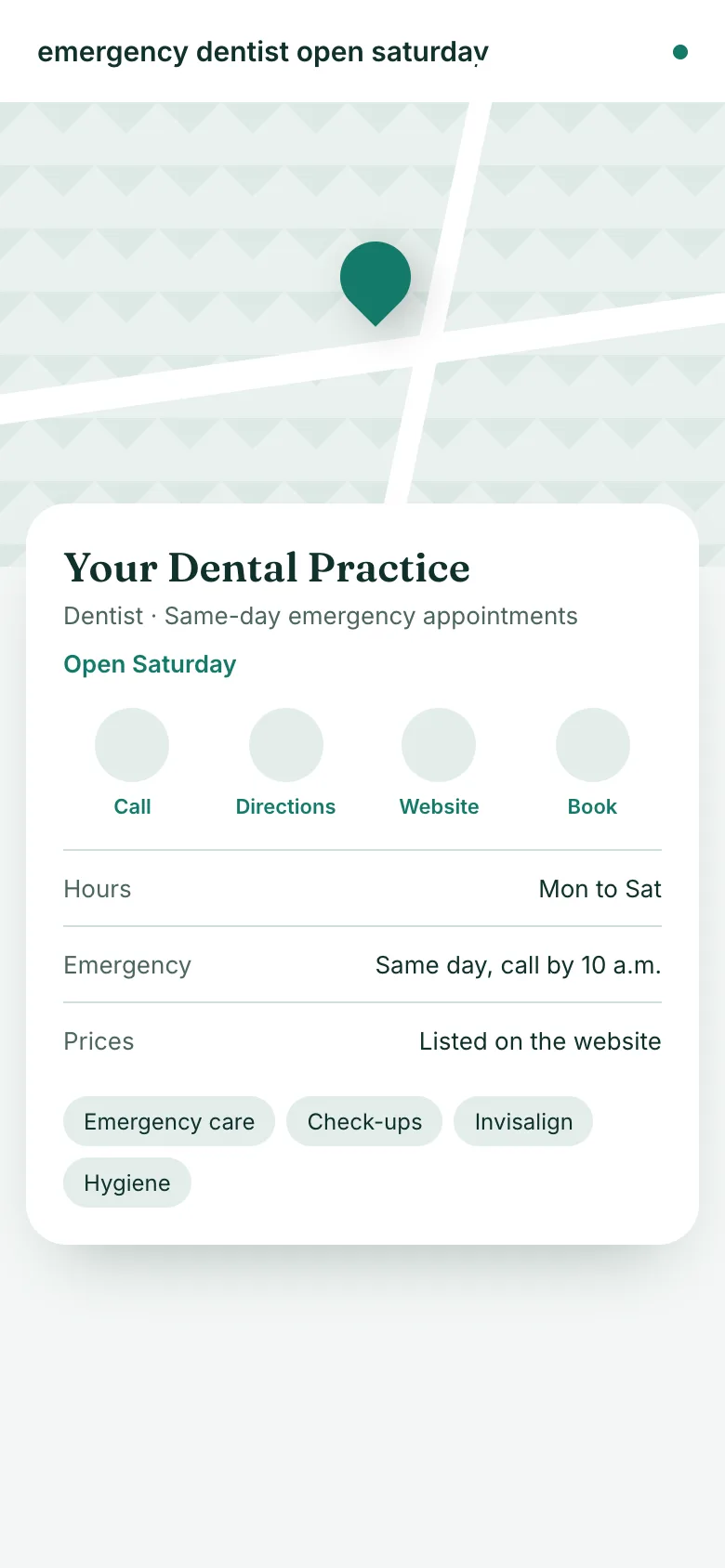
Patients now ask ChatGPT, Gemini and Google’s AI Overviews questions like “emergency dentist open Saturday near me” or “how much is Invisalign in my area”. The assistant answers with two or three practices. This is how we make sure an independent practice is one of them, and how we prove it.
Independent practices compete with corporate groups and booking directories for the same searches. Their websites are often built around a photo slider and a phone number, with treatments, prices and opening hours buried or missing, which gives Google and AI assistants nothing clear to quote.
Prices, emergency availability and Saturday hours sit in a PDF or behind “call us”, so assistants recommend a practice that states them plainly.
The Google Business Profile has old hours, few photos and unanswered reviews, and it drives more calls than the website.
Nobody knows whether ChatGPT mentions the practice, so nobody can tell whether anything is improving.
Foundation first, in this order, so each step makes the next one work harder.
We ask 25 to 30 real patient questions in ChatGPT, Gemini, Perplexity and Google, and record who gets named today.
Categories, hours, services, photos and review replies on the Google Business Profile, in the first two weeks.
One page per treatment, each opening with the answer a patient wants: what it is, what it costs, how soon you can be seen.
The practice, its treatments, hours and reviews marked up so search engines and assistants can read and quote them.
The same questions every month, so the report shows which answers now name the practice.
Everything an assistant needs to recommend the practice, stated plainly and backed by structured data.
A sheet of the questions patients actually ask, with the practices each assistant names today. It becomes the scorecard for every monthly report.
Each treatment page opens with a two-sentence answer, the price or price range, and the next available appointment, before any detail.
The practice described in schema.org vocabulary, so Google and AI assistants can confirm who it is, where it is, what it offers and when it’s open.
{
  "@context": "https://schema.org",
  "@type": "Dentist",
  "name": "[Practice name]",
  "address": { "@type": "PostalAddress", … },
  "openingHoursSpecification": [ … ],
  "availableService": [
    { "@type": "MedicalProcedure", "name": "Emergency appointment" },
    { "@type": "MedicalProcedure", "name": "Invisalign" }
  ],
  "aggregateRating": { … }
}Every field filled, services listed with prices where the practice is happy to share them, fresh photos, and a routine for replying to every review within two days.
These are the numbers in the monthly report, each measured against the baseline from the first audit.
Start with a free audit, then see exactly what we’d build and in what order.
Free audit firstNo obligationPlain-English results