Tracking not checked
Without accurate conversion data, Google’s bidding optimises for the wrong thing.
How we run paid search and social for a kitchen fitter so the budget goes on people planning a new kitchen, not on clicks that never call.
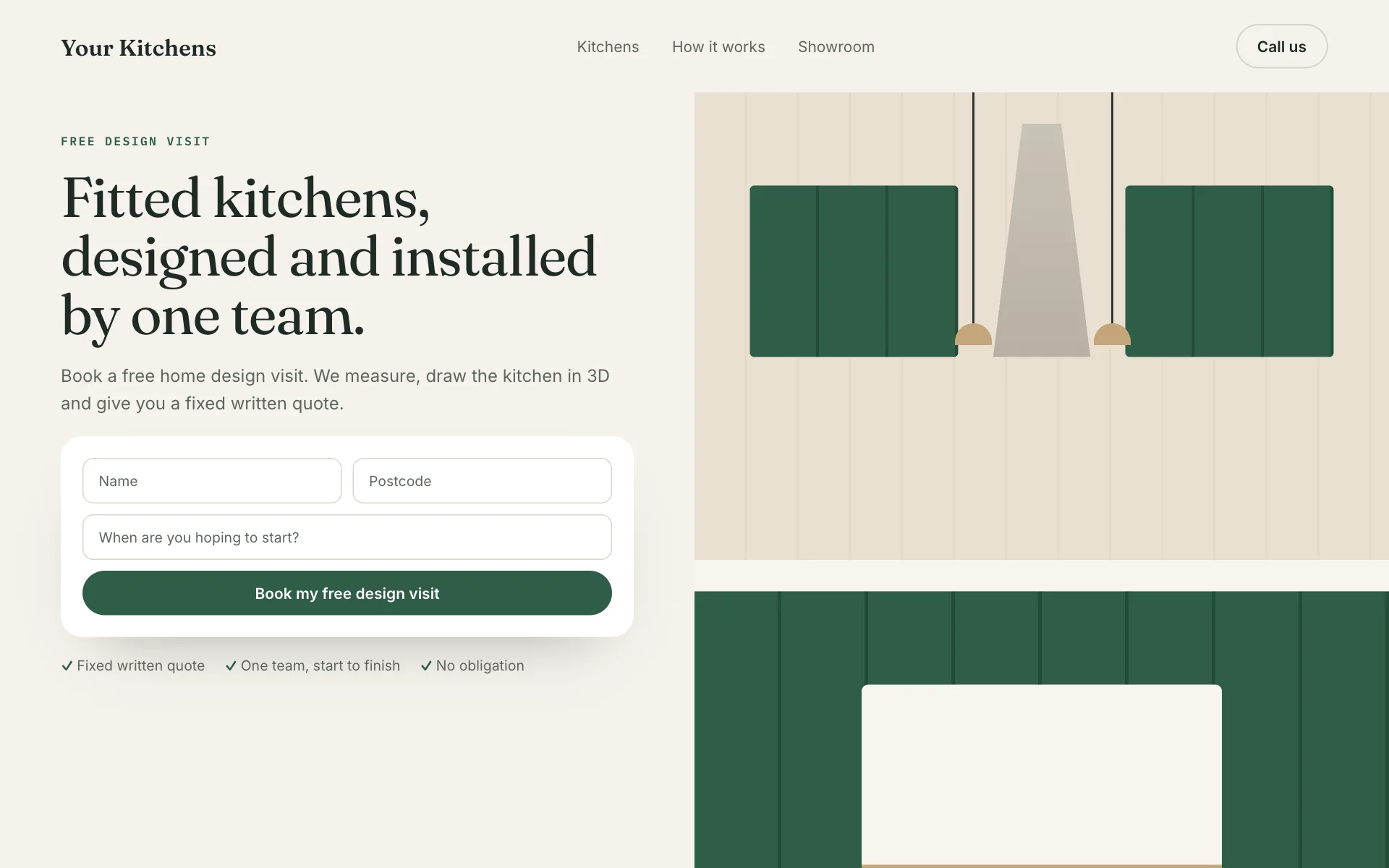

A new kitchen is a big, considered purchase, so one good lead is worth a lot, and wasted clicks are expensive. This is how we run Google Ads and Meta Ads for a kitchen fitter, measured against design visits and signed jobs rather than clicks.
Many small firms try ads, see clicks but few calls, and stop. Usually the campaign itself isn’t the problem: conversions aren’t tracked, ads send people to the homepage, and broad keywords pay for “kitchen ideas” browsers rather than people ready to book a design visit.
Without accurate conversion data, Google’s bidding optimises for the wrong thing.
Broad keywords and loose audiences spend the budget on inspiration seekers.
Ads that land on the homepage lose the visitor before they find the booking form.
Foundation first, in this order, so each step makes the next one work harder.
Website speed, tracking and landing pages checked before any money is spent.
Searches that show buying intent, local targeting, and negative keywords to block the browsers.
Search for people ready to book, Meta for showing finished kitchens to homeowners nearby.
One page per offer, with real project photos, price guidance and a short design-visit form.
Daily checks in the first two weeks, then weekly changes to bids, keywords and ads, reported in plain English.
Campaigns aimed at people planning a kitchen now, with every lead traced back to the ad that produced it.
A pass or fix list for tracking, page speed and forms, so the first pound of spend is measured properly.
Tightly grouped keywords for design visits, replacements and specific styles, with ad copy that matches each search.
Before-and-after project photos and short videos shown to homeowners in the service area, retargeting people who visited the site.
Pages built for one action, with the firm’s own projects, honest price guidance and a form that asks only what the fitter needs.
These are the numbers in the monthly report, each measured against the baseline from the first audit.
Start with a free audit, then see exactly what we’d build and in what order.
Free audit firstNo obligationPlain-English results